The dead man lay, as dead men always do, especially heavily….
— Leo Tolstoy, “The Death of Ivan Ilyich”
The meaning of life, the value of
life, is a topic that fascinate us. Writers across generations seek to explain
this very topic. Even in great works, such as Franz Kafka’s
“The
Metamorphosis” and Albert Camus’ “The
Guest,” writers often sought to explore various themes in which to explain
the value of a human life.
Tolstoy is a Russian writer, considered
to be one of the world’s greatest novelists, and his short fiction, “The Death
of Ivan Ilyich,” written in 1886, is considered one of the best examples of
novellas. This short fiction also serves to explore the very topic of the worth
of one’s life. Tolstoy does so through the character, Ivan Ilyich.
Ivan Ilyich is a man believed to
possess all the best things in life during a period where good standing, good
breeding, and good living represent a good life. Mr. Ilyich himself believes
that his own life should be carried on pleasantly and with decorum, as he
thought that a life that was easy and approved of by society is truly a quality
life to live. He was wrong.
Leo Tolstoy outlines how Ivan’s
life was not one he was truly living. His life was one of superficial pleasures
and relationships, so therefore, his life had no real meaning. Rather, his life
was, as Tolstoy described, “very simple and ordinary
and very awful.” Ivan Ilyich only begins to understand that his life had no
real meaning nearing the time of his death. During the three-day period in
which Ilyich agonized over the approach of death, he came to the realization
that he had been going the wrong direction his entire life. He proclaims that
he had been wrong. Before he came to this realization, though, he felt stuck.
Death could not yet claim him because he continued to insist that his life had
been good, which prevented him from going forward. However, once he does
realize that he had not lived a good life, he came to understand that there was
a way to free not only himself, but his loved ones, from the sufferings caused
through his illness. Then, once he fell into the “black hole,” he saw light,
not darkness.
In other
words, Tolstoy portrays that the meaning of human life is measured not in superficial
things that conform to society’s standards, but through actual values that is
reflected in a person’s character, such as the relationship they build with
others, and from actions taken from the goodness found within their heart.
“Gerasim did this easily, willingly, simply and with a goodness of heart which touched Ivan Ilyich.”
Leo Tolstoy, “The Death of Ivan Ilyich”
So, what
does the really mean in the grand scheme of things? How does that relate to
stories today? How does this particular theme relate to other cultures, too?
As I mentioned
before, writers across generations are always seeking to explore the meaning of
a human life. Mary Shelley is one of those authors. Many people may be familiar with her story, “Frankenstein,” which is the story about a man who created a monster in
his attempts to create life. However, Shelley goes on to challenge readers on
who is truly the monster, and who is truly the man. The way in which she does
is can relate back to the value placed in one’s life.
A portrait of Mary Shelley
Is the
monster another human being with worth and value because he is intelligent like
any other man? Is Doctor Frankenstein one whose life is monstrous for his lack
of empathy towards his own creation?
Her
sensitivity towards the subject highlight why this theme is one that is not
easily explored, and one that has no clear answer. As with Tolstoy, Shelley
showcases that one’s worth is not easy to answer, but it is one that can be
easily reflected upon the actions of the characters themselves. In this way,
she exemplifies why neither Frankenstein nor his monster are each without
meaning to their life.
So, my
challenge to you as an aspiring writer is to consider the different ways in
which to explore this theme. How does the actions, behavior, and personality of
your own characters demonstrate the true worth of a person’s life, and how does
the relationships your characters build and maintain reflect that value?
Don’t be
afraid to explore this theme in different ways, either. Both Tolstoy and
Shelley capture the same theme, but both of them also explored that theme in a
manner that differed from each other. Be as creative as you want.
If you’re also curious to read up on these two stories, or own a copy for yourself, you can purchase Tolstoy’s story here and Shelley’s here.
Everyone knows that most stories have a beginning, middle, and end. In fact, the narrative arc typically breaks the sequence of events in a story, such as the climax, into one of these three parts. Typically, stories will have the exposition and inciting incident in the beginning with the falling action and resolution in the end. However, the middle comprises of not only the rising action, but of one of the most pivotal sections in a story, the climax. In other words, the middle is where the readers learn a lot more about the characters and watch as their relationships deepen, and it’s also where all the tension is created that leads to the big climax.
Maragaret Atwood, a Canadian writer, certainly suggests in her story “Happy Endings” that the middle is the most difficult, too.
Her thematic approach in “Happy Endings” showcases how the beginning and end of stories take a backseat to the middle. As she states, “endings are the same however you slice it” and beginnings are “always more fun. True connoisseurs, however, are known to favor the stretch in between, since it’s the hardest to do anything with.” In other words, “Happy Endings” shows that the middle is not only the most fun part to explore, but it’s also the most difficult because of how it brings the beginning and end together. The underlying theme, however, is that the middle will ultimately change the overall arc of the story, its tone, and its characters.
“Happy Endings” is set up in a way where the story begins with John and Mary meeting. Moving on from there, each subsequent story is told a bit differently in what happens after the two meet, and these stories are then given a letter from “A” to “F.” The happy ending is in story “A” while all the other stories seem to revert right back to this same ending. What is different between each story, though, is what is expressed in the middle.
As Atwood reveals, each of these middle portions change the entire story despite the endings all being the same. For example, in story “B,” after the two meet, the readers learn that Mary is in love with John, but he doesn’t reciprocate, leading to these other events where Mary commits suicide in hopes that John would find her and marry her. In comparison, story “C” expresses how John is the one in love with Mary, but she is in love with someone else. To further add to the story, John is a married man. Hence, the story’s arc changes.
“That’s about all that can be said for plots, which anyway are just one thing after another, a what and a what and a what.
Now try How and Why.”
― Margaret Atwood, “Happy Endings”
Furthermore, as mentioned before, each of the stories begin with John and Mary meeting. The ending is the same, too, since the only “authentic” ending is where “John and Mary die. John and Mary die. John and Mary die.” What occurs in the middle, though, changes the tone of these stories because of what transpires in each that leads to that outcome. Story “A,” as well as story “D” have much happier tones compared to the other ones.
Likewise, the characters themselves change based on the changes in the middle and the change in the tone. For example, John from story “B” has different motives and emotions from John in story “C.” The same could be said of Mary.
Therefore, the characters no longer resemble each other and come across as different, unique characters that happen to share the same name.
“Detroit: Become Human,” a game Quantic Dream published on the PS4, demonstrates this same theme, too. Although, the game expresses the theme in a somewhat different manner than “Happy Endings.”
“Detroit: Become Human” follows three protagonists, all three of which are androids. Players go through the game, learning more about these three androids and their each individual story, as well as how their stories intertwine with each other. Players also make choices and depending on a player’s choice, the outcomes will change.
Connor, the new RK800 model from CyberLife
This utilization of the butterfly effect in the game is what demonstrates the same theme found in “Happy Endings.” Granted, “Detroit: Become Human” has a major theme that takes precedence over any other, which centers around the idea that one’s humanity is not based around someone being an actual human, but rather on what makes a person a human, such as emotions.
However, the fact that a majority of a player’s choices occur within the middle portion of the game creates that same effect as “Happy Endings” where the middle portion of each of the protagonists’ stories still change the arc of the story, its characters, and its tone.
This theme is primarily showcased in Connor’s timeline, one of the game’s protagonists who has the possibility to become deviant compared to the other two, who are deviant from the very beginning.
In Connor’s storyline, players can choose how he interacts with his human partner, Hank Anderson, and how he interacts with his fellow androids and other humans. Based on the choices a player makes, Connor can become deviant, where he no longer listens to his software’s protocols or follows his programming. Hence, he “deviates.” These choices are, of course, tied into whether Connor shows more emotion in his actions, such as displaying mercy when he chooses not to shoot two female deviants while they’re trying to escape from him and Hank.
The tone of the story shifts based on these middle portions of Connor’s story as well.
If players decide to stay true to Connor’s programming and make choices where he prioritizes his mission, acting more like a “machine” than a “human being,” the tone of Connor’s story darkens and becomes colder. His interactions with others have a marked difference where he even willingly tries to kill his own partner for interfering in the mission. These actions also demonstrate how Connor’s character changes, and how the story arc changes as well since his decisions later impact the direction the story takes involving his character.
“The moment of truth, Hank… Am I living being, or just a machine?“
― Connor, RK800
However, if players decide to go with the more “human-like” approach where Connor shows empathy to his fellow androids or prioritizes the well-being of others before the mission, the tone and story arc change once more, and Connor himself changes. He begins to display more emotions, such as fear, and due to that, the story takes on a somewhat lighter but no less dramatic tone.
Now, my challenge to all your aspiring writers out there is how you can best write this theme in your own way as well. Both “Happy Endings” and “Detroit: Become Human” use different tactics in order to showcase how changing the middle portion of the story will impact the story arc, the characters, and the tone. How can you also demonstrate this theme? Will you use science fiction to write this theme, such as using time travel or parallel universes to explore how the middle portion of a story is written will change the arc, characters, and tone?
Consider how the sort of medium or genre will change how you write this theme as well. “Detroit: Become Human” is a PS4 video game compared to “Happy Endings.” Explore how that will change how a story unfolds and what one can do with the story based on that.
For a reading of the audiobook of “Happy Endings,” check out this video. For a physical copy of“Detroit: Become Human,” try here. If you want to just see all the different endings of “Detroit: Become Human” and not play it yourself, brace yourself with this 4 ½ hour video here.
Reality hardly ever matches up to expectation. That’s not to say it never does, but typically, people’s expectation differ from what reality is really like. There are even memes dedicated to it. Not to mention that common phrase: “This is different from what I expected” (with some variations, of course).
This mismatch of expectation versus reality is something people often discuss, analyze, debate, or even write about. A lot of stories love the drama or comedy that occurs with these differences, and let’s be honest, there’s a lot one can do with expectation versus reality.
One such thing is using expectation and reality to determine an underlying theme in stories to further drive home a point. In Gabriel Garcia Marquez’s “A Very Old Man with Enormous Wings,” Marquez writes a theme about how reality often falls short of expectation, so when it does, people lose faith.
His story tells about an old man found in the backyard of the characters Elisenda and her husband, Pelayo. He is described rather pitifully, as someone who is “dressed like a ragpicker” with “few faded hairs left on his bald skull and very few teeth in his mouth” and with “buzzard wings, dirty and half-plucked.” Despite that, the old man is called an angel by Pelayo and Elisenda’s wise female neighbor, so everyone learns about the angel living in Pelayo’s chicken coop and come from all sorts of places in order to see him. They treat him more like a circus animal than an actual angel, which are beings typically seen as creatures to revere or even worship. More than likely, he falls so short of what they expect of an actual angel that he’s more like an anomaly than anything.
Even the priest, Father Gonzaga, that comes to check if the old man is truly an angel believes the old man is only an imposter. As he sees it, the angel fails to understand Latin, or to even greet him, a servant of his Lord, properly. Moreover, Father Gonzaga notices that in close quarters, the angel was “much too human: he had an unbearable smell of the outdoors, the back side of his wings was strewn with parasites…and nothing about him measured up to the proud dignity of angels.”
His only supernatural virtue seemed to be patience.
“A very old man with enormous wings”
He then proceeds to preach that the old man having wings doesn’t denote a divine status, or at the very least, doesn’t suggest the old man is an angel at all. People didn’t care, though. Here was someone with wings, no matter how poor those wings appeared, and who spoke a foreign dialect. To them, he could very well be an angel, but even if he was, they treated him far from what one would expect angels to be treated. No doubt because he himself failed to live up to their own expectations of what an actual angel looked or acted like as well.
In other words, they lose that faith that he is truly an angel. He nothing more than an act, or a form of entertainment. This point is hammered further home when a circus arrives in the town and no one pays the angel any more attention once they discover one of the circus members is a woman with the body of a spider.
The angel was the only one whotook no part in his own act.
― “A Very Old Man with Enormous Wings”
Marquez wasn’t the only one to study and imagine how this theme can play an integral part in a story, either. In the classic 1946 American Christmas movie that Frank Capra filmed and directed, “It’s a Wonderful Life” also touches upon how expectations fall much shorter than reality in a fresh new perspective that restores faith rather than causes people to lose it.
George Bailey is the protagonist of the series, and he lives what one might consider a somewhat difficult life due to the circumstances that cause him to drop his dreams for the sake of others around him. A rather loving and caring individual, he is often shown to put others before himself, even going so far as to rescue his guardian angel, Clarence, before he goes through with committing suicide.
The premise of the story, of course, is for Clarence to earn his wings through helping George Bailey. Where expectation versus reality comes more into play is when George Bailey wishes he was never born, believing that everyone else in his life would be better off because of it.
“Well you look about like the kind of an angel I’d get.”
― George Bailey
Boy was he wrong. The moment he wished to not be born, his wish was granted, and Clarence then proceeded to show him that everyone else’s life was not, in fact, remotely better when George Bailey was never part of it. Instead, things took a turn for the worse.
To summarize, George Bailey’s brother died young without George there to rescue him. His former boss was convicted of murder and arrested because George wasn’t there to stop him from prescribing poison to a young boy. His wife never left Bedford Falls and never married. His Uncle Billy was institutionalized. His father’s company fell into the hands of Mr. Potter, and the whole town became more corrupt because George Bailey wasn’t there to perform his good deeds.
Strange, isn’t it? Each man’s life touchesso many other lives. When he isn’t aroundhe leaves an awful hole, doesn’t he?
― Clarence
Naturally, this leads to George Bailey wishing quite desperately to live once again, not caring what happened to him. Just like that. He’s got his life back again, so he rushes on home, only to discover that everything had worked itself out. Because of all the good George Bailey did for the other people around him, they all mustered together to help him out. It’s all very warm, and it perfectly exemplifies that theme of how reality often falls short of expectation, but with a twist where, instead of causing George Bailey to lose faith, restores his faith to him.
As such, I challenge all you aspiring writers out there to demonstrate your own twists in the different themes you wish to tackle. Will you use two characters to portray your themes? Two stories? How does reality often fall short of your expectations, or the expectations of your characters? In turn, how does it affect them and the story, and how can you form a twist of your own to show how expectation versus reality can be both a positive or a negative (or neutral) thing?
If you want your own copy of “A Very Old Man with Enormous Wings,” you can buy one here, which includes other stories by Marquez. For those wanting to watch “It’s a Wonderful Life,” you can watch it here.
Hi, aspiring writers! Welcome to my first blog, Scheme’n’Theme.
As far as introductions go, my name is Kayla David. I’m a senior at Grand Canyon University, studying to earn a major in English with an emphasis in professional writing. Currently, I’m still deciding on which path I want to take, though GCU provides many excellent opportunities to help me choose.
Now, moving on from me, I do want to talk more about my blog.
This blog is a project I undertook for my multicultural literature class. Each of the blog posts represent an individual assignment I did throughout the semester. I have to say I enjoyed relating what I learned in class to these blog posts, and the entire experience was quite an adventure on its own, especially since it’s my first real time blogging anything.
Like the title of the class suggests, I learned a lot about multicultural literature. We did a ton of reading throughout the semester and explored more in-depth about the universal themes found in each of the stories we read. While some stories were less my cup of tea, I still enjoyed the discussions we had on the stories, their writers, and the underlying themes of each.
Our discussions allowed us to dive deeper into the stories in order to better understand how the writers incorporated different elements in order to not only write a theme, but to write one that speaks to people on a more personal level throughout the world. These discussions also helped put into perspective why each author incorporated these particular themes into their stories, or why they used those specific elements in order to write those themes.
The further along we got in the semester, the more I came to understand how literature is globalized. As I see it, the term global relates to literature because of how literature relates to people on a more intimate level. Literature speaks to us on a deeper level.
That is why literature extends past national boundaries and finds its way into foreign nations to make a mark on their cultures as well. We are connected to each other through these words and through these same themes that potentially define different fundamental aspects of ourselves.
20th-century literature, in particular, blurs national boundaries. As technology developed, stories written in the 20th-century could be accessed across the globe over the Internet. Translations of these books also found their way online. People no longer needed to understand another’s language in order to read their literature, and people no longer needed to hunt down copies translated in their language in order to read as well.
More than that, though, people didn’t really need to know the language in order to understand the story, because 20th-century literature opened up a way in which those boundaries fell away. Theme became a universal language instead.
Theme shows us that people overcome culture, such as race or values, to learn that people outside one’s own culture share similar experiences, too. Theme shows us that people are people. No matter what kind of situation they are in, or what issue they are dealing with, we all experience the same emotions in some shape or form.
Theme in the 20th-century literature does more than that, too. Literature from this time period portrays struggles with cultural identity as well.
Albert Camus’ “The Guest” is only one example of this struggle. Daru, the main character, is someone who struggles with cultural identity. Although someone who is born in Algeria and feels exhiled anywhere else, he lives in a French colony, which underlines the issues he struggles with as he is expected to obey an order from the French government despite not considering himself French.
Like the example above demonstrates, these reasons are why 20th-century literature blurs national boundaries and literature takes on a global meaning, because of its universality.
That’s why I decided to name my blog Scheme’n’Theme. I wanted to be able to relate more of how these different themes are reflected in pop culture, too. This way aspiring writers are challenged to consider more of how their writing portrays similar themes as well and why. In other words, we “scheme” in order to “theme.”
As a matter of fact, he was always on the lookout for“something a little better,” but he died before he found it.
― James Baldwin, “Sonny’s Blues”
People suffer. It’s an indisputable part of life and everyone bears with their own sufferings in their own ways. Therefore, it comes as no surprise that writers love to explore various themes associated with suffering as well. James Baldwin’s “Sonny’s Blues” is a perfect example of a theme involving suffering that underlines the entire story.
“Sonny’s Blues” is told from the point of a view of an unnamed individual, who is the older brother of the character named Sonny. The story starts off with the reader learning about the narrator’s brother being arrested for drug usage, specifically heroin. The story then moves on to explore what happens when Sonny is released and returns to New York to spend time with his brother there.
Upon seeing Sonny, these different memories resurfaced for the older brother, and he remembers not only watching Sonny being born, but also hearing him speak with first words. He also later remembers the promise he made to his mother to look after Sonny.
Naturally, the brother repents for is past actions, as he believes he failed Sonny after not reaching out to Sonny when he needed his brother, or not looking after him as he should’ve. So, of course, this, in its own way, causes suffering to the narrator. His suffering is further highlighted in his lack of understanding Sonny.
Not only does the narrator himself acknowledge this fact when he mentions how he doesn’t understand why Sonny would want to hang around a nightclub and play music, claiming that it seemed beneath Sonny to do those things, but he realizes he never actually asked Sonny about himself. Sonny himself states that he hears the narrator when they talk to each other,but the narrator never hears what Sonny himself has to say.
As for Sonny, his suffering comes from a sense of feeling trapped. There’s an entire scene dedicated to Sonny explaining himself to his brother, trying to talk to the narrator and tell his older brother about his experiences and his feelings. One of his quotes perfectly summarizes the scene:
“I was all by myself at the bottom of something…and I smelled it, you know? my stink, and I thought I’d die if I couldn’t get away from it and yet…something kept telling me that maybe it was good to smell your own stink….”
― Sonny
Here, the reader learns exactly how Sonny suffered and what led him to taking the actions he did previously, and all of it comes down to the fact that he just can’t seem to get away. Yet, his sufferings have spurred him to learn more and more about himself, and even the older brother’s sufferings lead him to not only learn more about himself as well, but more about Sonny, too. That is the theme here. Suffering leads to self-discovery.
However, what creates the bridge between suffering and self-discovery is a remembrance of the past and living in it in order to find some form of freedom that leads to that self-discovery. Each of the memories that the narrator remembers when speaking with Sonny all build up to the last part of the story when he finally hears Sonny play. As the narrator puts it:
I heard what he had gone through, and would continue to go through until he came to rest in earth. He had made it his: that long line…And he was giving it back, as everything must be given back, so that passing through death, it can live forever.
― Sonny’s older brother
James Baldwin isn’t the only writer to tell a story involving this theme, either. F. Scott Fitzgerald also wrote about this theme in “The Great Gatsby.” Like with Baldwin, Fitzgerald’s characters also discover more about themselves through their own sufferings as well, and what’s even better is that Fitzgerald very much uses the past as a means of highlighting characters, their actions, and their sufferings.
The first character we encounter in “The Great Gatsby” is the narrator, Nick Carraway. Also like the narrator in “Sonny’s Blues” telling his story about him and Sonny, Nick tells about his story and involvement with the character, Jay Gatsby. The difference here is that Nick discovers a part of himself through Gatsby’s own sufferings and by extension, what he suffered after Gatsby’s death led him to reflect on his disinterest in others, particularly their sorrows and elations.
Throughout the entire story, Nick narrates about his time with Gatsby and what those previous events he witnessed led him to forming a relationship with Gatsby. In fact, the first time he meets Gatsby, Nick doesn’t even realize it’s him. However, after his introduction and him leaving to attend to other matters, Nick begins to ask who Gatsby is and what he does, so we catch the first glimpse of Gatsby’s past.
As Jordan, one of Nick’s companions that he meets through his cousin Daisy, tells Nick, Gatsby was an Oxford man. From there, Nick starts to envision Gatsby’s past, stating, “A dim background started to take shape behind him, but at her next remark it faded away.” This next remark being, of course, that she doesn’t believe Gatsby.
Throughout the rest of the story, we learn more and more about Gatsby through Nick’s interactions with him. Gatsby himself takes Nick for a luncheon and tells him about his story, but like Jordan, the moment Gatsby talks about Oxford, Nick doesn’t believe him.
However, it’s the events that transpire after these other moments that tie more into the suffering of these characters, particularly of Gatsby.
We soon learn that the reason Gatsby wants to become closer to Nick is because Nick shares relations with Daisy, who Gatsby had met during his time as a military man. Gatsby had fallen in love with her, and for five years, he remained faithful to her, believing he would one day marry her.
Eventually, Gatsby does get his chance. Nick invites Daisy over to tea, arranging for Gatsby and her to meet at long last. From there, everything seems to be working out fine. They go over to Gatsby’s house and spend time together, but Nick claims that he thinks Daisy no longer lives up to her past self and what Gatsby later envisioned.
He states: “There must have been moments even that afternoon when Daisy tumbled short of his dreams… It had gone beyond her, beyond everything…No amount of fire or freshness can challenge what a man will store up in his ghostly heart.”
This sort of ideal he had of Daisy from the past no longer matches up to the Daisy he envisions for the future, but more than that, Gatsby refuses to move on from the past.
He mentions to Nick that Daisy no longer understands, like she used to do. He says to Nick, “And she doesn’t understand…She used to be able to understand.”
Naturally, Nick’s response is to tell Gatsy not to ask too much of her, because one cannot simply repeat the past. Gatsby’s reaction is to cried out, “Can’t repeath the past?” before adding, “Why of course you can!”
He looked around him wildly, as if the past were lurking here in the shadow of his house, just out of reach of his hand.
– Nick Carroway about Gatsby regarding their discussion on Daisy
These moments are what leads Nick to understanding more about Gatsby’s predicament, and because Gatsby refuses to move on from the past and continues to live in it, hoping to essentially bring his past into the future, he suffers. He suffers because he cannot seem to fathom that in the future, the past cannot really be relived or repeated. Due to that, he makes the mistake of trying to force Daisy into admitting a lie, like telling Tom Buchanan, her husband, that she never loved him.
Even though, from Jordan’s recount of those past events, there was a moment when Daisy did. She did before Gatsby tried to come back into her life after his return from the war.
As such, Nick learns about what Gatsby suffered to reach the place he had. Afterward, when Gatsby died, unable to truly achieve his dream, I felt that Nick himself suffered, as someone who was more intimately aware of who Gatsby really was and all that he had done to come so far, as well as someone who knew all about what really occurred.
As Nick states about Gatsby:
[H]is dream must have seemed so close that he could hardly fail to grasp it. He did not know that it was already behind him, somewhere back in that vast obscurity beyond the city…So we beat on, boats against the current, borne back ceaselessly into the past.”
Nick discovers a part of himself in those moments he spent with Gatsby. He discovers that what temporarily closed out his interest “in the abortive sorrows and short-winded elations of men” was a type of “foul dust” that “preyed on Gatsby” and “floated in the wake of his dreams.” He also discovers more about the people around him, learning that Tom and Daisy were careless people who “smashed” things and left the mess for someone else to clean up.
These relevantions are like the ones that Sonny’s older brother also discovers about not only himself, but about his brother, too. When characters suffer, there is this idea that suffering creates a path in which the characters can reflect more on their circumstances, themselves, and the people involved. These reflections then give fruit to discoveries about themself and others as well.
For all you aspiring writers out there, I challenge you to discover what suffering means in your own story. Learn more about what your characters suffer and how they suffer. Really dig deep into why they’re suffering, too.
Is because they felt trapped, as Sonny did, or is it because of their love and/or admiration for someone else, as in the case of the older brother and Nick respectively? Or was it due to a character refusing to move on and clinging helplessly to the past while still moving forward, like Gatsby?
Think more about how to incorporate the topic of suffering into your story in order to express a theme.
I’ve lied before in my life. I’ve told white lies, and I’ve told exaggerated lies. It is something I’m not proud of, but it’s something I did, nonetheless. On the other hand, I like to consider myself rather honest. I know I am certainly not as honest as they come, but for the most part, I don’t tell a lie unless necessary.
That’s why Boori Ma in Jhumpa Lahiri’s story “A Real Durwan” felt relatable to me. Lahiri describes Boori Ma as a 64-year-old woman who looked “almost as narrow from the front as did from the side” and guarded the gates of the flat-building she had taken up residence in, like those of a durwan. One notable phrase she says throughout the story is, “Believe me, don’t believe me, such comforts you cannot even dream them.” Naturally, she says these words after each story she seems to tell to the other residents at the flat-building, often discussing her life before or of easier times. They often thought her to be lying when she told her stories, as she tended to exaggerate, which is why I think her quite relatable.
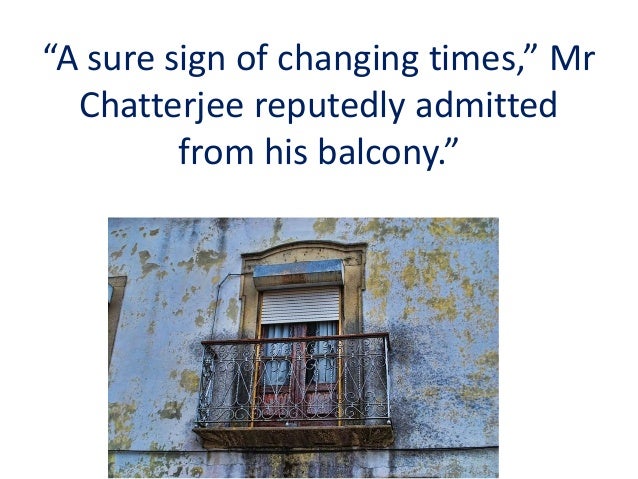
Mr. Chatterjee describes her as a “victim of changing times.” An apt description, as Boori Ma had been tossed out of her home to essentially become a stranger in her homeland, forced to relocate elsewhere in her country. The wives even believe she tells lies in order to grieve for her lost family. I also believe her stories are also her means to grieve, but also to protect her own self. It’s often what happens when people are going through tough times and have nothing else to rely on. The lies we tell ourselves are essentially the ones we need to hear in order to not succumb to negative emotions, such as grief or pain. Those little lies we tell ourselves are like anchors.
However, the value behind developing Boori Ma’s character as such is to create the theme that people are not quite so understanding, nor so forgiving to forget lies that are told to them, no matter the circumstances. This theme is showcased in the residents’ treatment of Boori Ma.
At the end of the story, Boori Ma continues to be a victim of changing times, as yet again, she is tossed outside after some robbers supposedly stole a basin set near the stairs of the building. The other tenants blame her, accusing her of informing the robbers and talking to strangers while everyone had went about reconstructing their whole building, such as getting new paint done and fixing the banisters.
Boori Ma proclaims her innocence, but the others turn against her.
“For years we have put up with your lies,” they retorted. “You expect us, now; to believe you?”
― “A Real Durwan”
They knew her to be a refugee, and before, they had once seemed to like her. Yet, they had treated her awfully. Boori Ma, welcome as she was into their apartments, was not allowed to sit on the furniture, and they handed her a glass of tea or a cracker tin occasionally. They showed her the typical kindness one would see strangers treat a stray animal, tossing a stray dog or cat a scrap of meat here and there. In a sense, they only liked her for the security she provided them when they all slept in the night and she guarded the entrance to the building at the gate.
Yet, when that security faded away, and they deemed her no longer necessary, they tossed her aside. They accused her of being a liar, so they distrusted her, even though she had done nothing really to earn their distrust. She had honored her responsibility as a durwan, though she was not a “real” one, and she “maintained a vigil no less punctilious than if she were the gatekeeper of…any other fancy neighborhood.”
Again and again, she proclaims, “Believe me. Believe me.” They do not believe her.
Once more, the theme of people’s lack of empathy or forgiveness towards those who are deemed liars is present in these scenes, and in each action the residents take against Boori Ma. What truly underlines this theme, though, is that when she essentially does tell the truth, they continue to believe she is lying to them.
Honestly, her tale is a sad one. Boori Ma’s story is also similar to the theme of a well-known, common story from Aesop’s Fables, “The Boy Who Cried Wolf.”
The moral of “The Boy Who Cried Wolf” is that liars are not believed even when they tell the truth. This moral essentially governs the representation of the theme in the story. However, the circumstances of leading to the boy and what he gets coming to him is drastically different from Boori Ma.
Boori Ma seemed not to lie on purpose. Her lies seemed to stem from heartache and other emotions, and it was hard to tell what was true and what wasn’t on her account. As for he boy in “The Boy Who Cried Wolf,” he purposefully lied to the villagers to alleviate his own boredom. Twice, in the story did he cry out to the villagers for help against a wolf, knowing they would come to scare the wolf away. Twice, the villagers responded to his call, and the boy laughed at them for their actions.
Then, on the fateful evening a wolf actually did appear, the boy ran to the villagers for help, terrified. Yet, they refused to listen to him, believing they would not fall for his trick yet again and leading to the wolf eating most of the flock of sheep. This behavior perfectly exemplifies the theme found in “A Real Durwan” as well.
The villagers had not forgiven the boy for his lies beforehand, and as they had not forgiven nor forgotten his lies, they would not respond to him telling the truth. Just as it was with Boori Ma, the boy wished the villagers to believe him, but they turned to him with deaf ears.
This theme is rather one characteristic to other stories found throughout various cultures as well. People that lie are often seen as unreliable or untrustworthy. People are also not quick to forgive liars or understand a person and the position that placed them into lying in the first place. This sentiment holds stronger in cases where people feel as if the liar had betrayed them.
Therefore, I challenge you as an aspiring writer to come up with a new approach to this theme. How would you tackle people’s lack of forgiveness or understanding towards those who lie? Would you provide foil characters to demonstrate your own beliefs on the matter, or to showcase how differing personalities in characters affect whether they are more forgiving or understandings towards liars? As always, have fun and be creative.
Read more of Jhumpa Lahiri’s stories here! Also read more Aesop’s Fablehere.
“Yellow Woman went away with the spirit from the north and lived with him and his relatives. She was gone for a long time, but then one day she came back and she brought twin boys.”
— Leslie Marmon Silko, “The Yellow Woman”
The above quote is from Leslie Marmon Silko’s story, “Yellow Woman,” and tells of a Native American myth involving women spirited away from their families, though most of them eventually return. The short story itself follows the tale of an unnamed, married woman, who draws a connection between herself and the Yellow Woman.
Like the woman from the myth, the protagonist of “Yellow Woman” wonders if the man she follows into the mountains and sleeps with is a ka’tsina spirit. She even wonders, as she lies beneath the man, if “This is the way it happens in the stories…with no thought beyond the moment she meets the ka’tsina spirit and they go.” However, her inner turmoil over the matter continues to drive the story. She feels a reluctance to return home, though she thinks of going home at moments throughout, but she also thinks that her family would be fine without her.
Yet, she doesn’t truly believe she is the Yellow Woman and even notes to herself that “I will see someone, eventually I will see someone, and then I will be certain that he is only a man—some man from nearby—and I will be sure that I am not Yellow Woman.”
This exact inner turmoil builds upon the underlying theme of the story: when lost, people will feel a disconnect between themselves and their reality, or their environment.
One way in which people hope to gain better control of
themselves and ground themselves more in reality is through their connection
with others, but in the mountains, devoid of any contact other than with the
man, the woman feels as if she is truly part of some myth. If she could only
meet someone else, though, that feeling would dissolve and she’d snap out of
the trance she most certainly feels herself in. In that sense, if she can snap
herself out of the trance, she can also return to her present reality.
Yet, she also hesitates to do so, mentioning that “When I saw the stone house I remembered that I had meant to go home. But that didn’t seem important anymore….” This idea of her reluctance to return home is reinforced in the story when she complies with the man’s wishes, not fighting him as he leads her away or taking up his offer to sell the meat he had stolen.
Of course, she continues to feel lost and distant from her present reality. One literal image in the story that represents her feeling of distance is when she stands on the balcony of the man’s house and mentions she cannot see the pueblo, though the man points out that he can see the “entire world”, pointing out the borders of the Navajo reservation, the Pueblo boundaries, and the Texan ranches. Her disconnect from reality is also present in her belief that the family she left behind would move on without her, even remembering how her grandfather, who loved stories about the Yellow Woman, would tell a story about her as well. She, too, would become just another Yellow Woman story to be told.
This belief is sort of a blending between myth and reality. It reveals how people who are lost may sometimes find ways to connect their inner turmoil over their predicament at being lost, or feeling as if there is no control in their life, with other things in their life. In this case, the woman connects her inner turmoil at being lost with the myth of the Yellow Woman.
“Spirited Away” follows the story of the young, 10-year-old Chihiro on her quest to rescue her parents. She enters a strange world and watches her parents get turned into pigs; she wounds up working at a bathhouse thanks to the help of a young boy named Haku. However, Chirhiro’s experience is one of inner turmoil, too, where she must overcome her new environment in order to save her parents and leave the strange land they’ve seemed to encounter. Like “Yellow Woman,” “Spirited Away” also involves myths, though from Japan. How the myths are incorporated, though, differ from “Yellow Woman,” and the significance of the myths also change the meaning of the theme.
Whereas “Yellow Woman” used the myth to express its theme of lost characters feeling a disconnection from reality, “Spirited Away” uses myth to build the theme rather than to express it. As Chihiro is left on her own in a world filled with spirits where she is the only human, her disconnection from reality is more literal than in “Yellow Woman.” Her sense of being loss, though, is a result of her being far from the reality she knows and not having anyone else from that same reality to help her. The only people she can turn to are those from the other, stranger reality, such as the different spirits she meets and befriends along the way. The turning of her parents into pig also forces Chihiro into a predicament out of her control.
In comparison, in “Yellow Woman,” the woman’s sense of loss stems less from the myth itself but is more a personal one, and her disconnection from reality is brought on by herself, though she uses the myth as an anchor. Chihiro’s anchor to reality is the mission to save her parents and return.
“That’s how Yubaba controls you…by stealing your name.”
– HAKU, “SPIRITED AWAY”
As a writer, I challenge you to observe how the incorporation of certain elements in a story may change an underlying theme, or how it changes the way a theme is written. “Yellow Woman” and “Spirited Away” both incorporate myths into their stories as an element in the narration, but while “Yellow Woman” uses the myth to highlight its theme, “Spirited Away” uses myth as a foundation for the same theme. For a bigger challenge, try incorporating more than one element in two separate stories to explore how the same elements can be used differently to write a specific theme.
I also recommend this article here for more about “Spirited
Away,” as well as checking out more Studio Ghibli films out here. For a physical copy of “Yellow Woman,” check here. For a physical copy of
“Spirited Away, check here.
Love is not something uncommonly explored in stories across the world. In fact, love encompasses a myriad of themes and transcends countless generations. From tumultuous romances to unrequited crushes, and even the devotion expressed between friends and family, love is intricately intertwined into people’s lives and stories. As such, people love love.
One such story that not only withstood the test of time but appealed to one of the many themes of love is Murasaki Shikibu’s “The Tale of Genji.” Written in the early 11th Century, “The Tale of Genji” follows the story of Prince Genji about his many loves and passions. The story itself, a Japanese classic, is considered one of the first and finest novels with a huge influence on Japanese literature and culture.
As one can imagine, love is infinitely complicated, and more so when tied into certain obligations and standards, which were common for those of a higher social position, such as the kind Genji himself occupied. This belief is most reflected in the chapter section titled The Broom Closet in the story. Here, Prince Genji speaks not only with his close friend Tuno Chujo, but two others – a guards officer and a functionary in the ministry of rites – on the matters of love and marriage.
The guards officer states that “A man see women, all manner of them, who seem beyond reproach, but when it comes to picking the wife who must be everything, matters are not simple.” He elaborates more on this point by describing how a girl, especially that of a potential wife, has many duties in which she must perform, and she must also hold herself to a much higher standard and comport herself accordingly.
“You see, I’ve come to the realization that as far as women are concerned there aren’t many who are flawless enough to make you think she’s the one.”
– Tu no Chujo
For example, there is the matter of the household. As the guards officer explains, the girl must not be too delicate, for she must be able to handle the household on her own, but she cannot be too serious, as she may neglect her appearance and cause a stir based on that. If a girl is too young or childlike, she is lacking some other quality that the husband must make up for.
These statements then cause the guards officer to conclude that “it’s rare that a woman actually lives up to her reputation.” Quite a dismal statement, it seems. Also a great example sort to highlight how the intricacies of social life, or court life, often hinder one in the matters of love, so that being in love with someone is quite different than finding the perfect someone to love. This theme is present throughout the rest of the conversation among the four gentlemen, as they go about sharing their stories in matters of love and finding the perfect wife.
Even the characters recognize the ridiculousness of their predicament, as one states how there is no woman who can live up to the ideals in a man’s heart, and because of that, the same character claims, “I can’t help thinking now that it’s good enough for a man if his wife is someone who is wholly dependable.” Likewise, this ideal of seeking perfection in a woman showcases how people end up finding only the faults in others instead, adding more depth to the inherent theme found in The Broom Closet.
“The Tale of Genji” is not the only novel to explore this same theme, either. Jane Austen’s “Pride and Prejudice” also tackles how one’s particular social status may interfere with them seeking out love. The most prominent case of the exploration of this theme is in the budding romantic relationship between Elizabeth “Lizzie” Bennet and Fitzwilliam Darcy, often referred to as Mr. Darcy. Jane Bennet and Charles Bingley are a secondary example of this theme in play, which inevitably ties back into Lizzie and Mr. Darcy’s own romance.
However, there is a contrast
between Murasaki Shikibu’s approach to this theme compared to Jane Austen.
Lizzie Bennet and Mr. Darcy
For Jane Austen, she focuses
primarily on building up tension between the two characters to reflect how
their different personalities and upbringings provide a source of conflict
between them both. From there, she uses these differences to slowly build their
dynamic as well. Lizzie sees Mr. Darcy as someone proud and haughty, who looks
disdainfully on those around him. Mr. Darcy, in comparison, finds her family
lacking any sense of propriety and also realizes she is of unequal status to
him, which prevents him from pursuing a marriage with her. However, he wounds
up confessing his love to her anyways and proposing to her.
In this one infamous scene from the 2005
adaption of the book, Lizzie and Mr. Darcy discuss their feelings towards each
other in a very heated argument. Both try to explain themselves, but still,
they are at odds. Mr. Darcy reveals how much Lizzie’s social standing has
troubled him since he found himself falling in love with her, but Lizzie
herself is concerned only with him trying to interfere with her sister and Mr.
Bingley’s happiness.
“Could you expect me to rejoice in the inferiority of your circumstances?”
“From the first moment I met you, your arrogance and conceit, your selfish disdain for the feelings of others made me realize you were the last man in the world I could ever be prevailed upon to marry.”
– Mr. Darcy and Lizzie Bennet confronting each other
Regardless, their dynamic is interesting in how it tackles the theme of how social standing interferes with the pursuit of love and marriage. In The Broom Closet, there doesn’t seem to much of a happy ending for any of the gentlemen in their stories about their quest for finding love and the perfect wife. However, in “Pride and Prejudice,” Mr. Darcy overlooks all sense of proper standing to marry the woman he loves, who is someone of lesser status than him. In turn, happiness abounds.
As such, these two women writers represent two different endings to the same theme. Whereas Shikibu reflects a more unhappy ending because the men in her story refused to change their views and marry solely for love, Austen demonstrates how the men in her story do find their happy ending after ignoring social standings and marrying for love.
So, my challenge to you aspiring authors out there is to reflect on how love takes meaning in your own life. Explore how love and marriage are different now than before, and when you write your next scene or story, think on how that may play a prominent role in the themes you wish to write about. Whether it’s love where forbidden romance destroys the lives of those around them, or a marriage falling apart due to the spark of love dwindling, or even the uplifting love that friends and families inspire in each other, really challenge yourself and discover the meaning of love in your own stories.
For those interested in reading or
owning their own copy of the two stories
featured here, you can find “The Tale of Genji” here
and “Pride and Prejudice” here.




 Scheme'n'Theme